
Your nerves, explained in plain English.
No medical degree required. Here's what your nerves actually do, what goes wrong when they're damaged, and how the therapies we offer are meant to help — including what the research does and doesn't show.
Think of your nerves as your body's wiring
Your brain and spinal cord are the control center. Your peripheral nerves are the wiring that runs out to everything else — your hands, your feet, your skin, your muscles.
They carry two kinds of messages, constantly, in both directions:

Sensory messages — coming in
"That's hot." "The floor is right there." "Something sharp." These travel from your body to your brain, and they're how you feel anything at all.
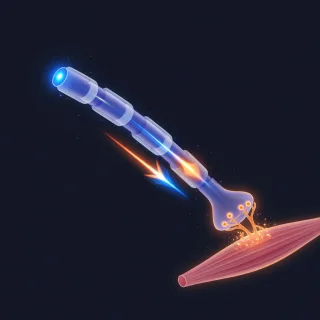
Motor messages — going out
"Lift that toe." "Grip harder." These travel from your brain to your muscles, and they're how you move and keep your balance.
A single nerve fiber is wrapped in a fatty insulating layer called the myelin sheath — think of the plastic coating on an electrical cord. That coating is what lets signals travel fast and cleanly.
See the difference for yourself
An illustration comparing a healthy insulated nerve fiber, where the signal travels smoothly and quickly, with a damaged nerve fiber whose insulation is broken, where the signal travels slowly and irregularly.
In a healthy nerve, the insulation is continuous and the signal jumps quickly from gap to gap — arriving strong and on time.
Simplified educational illustration. Real nerve anatomy is considerably more complex, and this diagram is not a depiction of any individual patient's condition.
Short explainers, no jargon
Three short videos covering how nerves work and how two of our therapies are meant to help. Each is under a minute.
How your nerves work
What a healthy nerve signal looks like, what changes when the insulation is damaged, and why that causes both numbness and pain.
Silent animation — all narration appears as on-screen text. AI-generated illustration, not clinical footage.Read the transcript
How Your Nerves Work — Why damaged nerves cause numbness and pain at the same time
- Your nerves are the wiring between your brain and everything else
- A healthy nerve is insulated — signals travel fast and arrive intact
- When that insulation frays, messages arrive late, weak, or not at all
Closing card: Questions about your symptoms? Book a no-obligation evaluation.
Red light & laser therapy
How red and near-infrared light reaches tissue beneath the skin, what it's thought to do at the cellular level, and what the research supports.
Silent animation — all narration appears as on-screen text. AI-generated illustration, not clinical footage.Read the transcript
Red Light & Laser Therapy — How photobiomodulation is meant to work — and what the research shows
- Red and near-infrared light passes through skin into the tissue below
- It's absorbed by mitochondria — the parts of cells that make energy
- The best-supported therapy we offer for peripheral neuropathy
Closing card: Questions about your symptoms? Book a no-obligation evaluation.
Electrical stimulation (EMS & TENS)
How gentle electrical pulses interact with nerve pathways and muscle, what they're genuinely good at, and what they don't do.
Silent animation — all narration appears as on-screen text. AI-generated illustration, not clinical footage.Read the transcript
Electrical Stimulation — What EMS and TENS actually do — stated honestly
- Soft pads on the skin deliver gentle, rhythmic electrical pulses
- TENS targets sensory nerves to interrupt pain signals
- EMS targets motor nerves — for symptom relief, not nerve regrowth
Closing card: Questions about your symptoms? Book a no-obligation evaluation.
What "nerve damage" actually means
When that insulation frays — or the nerve fiber itself is injured — messages get garbled. That's not a metaphor; it's the actual mechanism behind most neuropathy symptoms.
It explains something patients often find confusing: how you can feel numb and be in pain at the same time. Some signals aren't getting through (numbness), while damaged fibers misfire and send pain signals that nothing actually caused (burning, tingling, electric jolts).
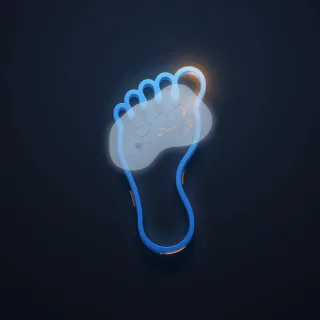
Signals that don't arrive
You feel: numbness, "my feet feel like they're wrapped in cotton," not noticing a pebble in your shoe.
Why it matters: if you can't feel a blister or cut, you can't treat it early — which is why foot care matters so much in diabetic neuropathy.
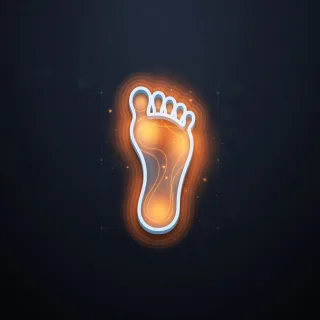
Signals that misfire
You feel: burning, tingling, pins-and-needles, sudden electric jolts, or pain from something as light as a bedsheet.
Why it matters: this pain is real, even though there's no injury where you feel it. The problem is in the wiring, not the skin.

Signals that arrive weakly
You feel: weak grip, dropping things, unsteadiness, tripping, difficulty with buttons or keys.
Why it matters: balance depends on your feet reporting where the ground is. Poor reporting raises fall risk.
When to get checked sooner rather than later
Nerve symptoms tend to be easier to address earlier. Don't wait it out if you notice numbness or tingling spreading upward from your feet or hands, new weakness or frequent tripping, a sore or blister on a numb foot, or symptoms that appeared suddenly.
Seek urgent medical care for sudden weakness on one side of the body, difficulty speaking, loss of bladder or bowel control, or rapidly worsening weakness — those can signal something other than peripheral neuropathy and need immediate evaluation.
A quick way to put words to what you're feeling
Tick anything you've noticed in the last few months. Nothing is stored or sent — this just helps you describe your symptoms clearly, whether you call us or your own doctor.
Here's what you told us
This is not a diagnosis, and it isn't a medical test. It only reflects the boxes you ticked. Many conditions can cause these symptoms — some unrelated to nerves entirely. Only a qualified clinician can tell you what's actually going on, and we'd encourage you to bring this list to whoever you see, including your own physician.
Seek prompt medical care rather than booking a routine visit if you have sudden weakness on one side of the body, difficulty speaking, loss of bladder or bowel control, or weakness that is worsening quickly — those can point to something other than peripheral neuropathy.
What each one does — and what it doesn't
This is where a lot of clinic websites overpromise. We'd rather give you the honest version, because it's the version that helps you make a real decision.

Red light & Class IV laser therapy
Also called photobiomodulation, PBM, or low-level laser therapy (LLLT)The plain-English version
Specific wavelengths of red and near-infrared light pass through the skin into the tissue underneath. Light at these wavelengths is absorbed by mitochondria — the parts of your cells that produce energy. The working theory is that this absorption gives cells more usable energy and changes local inflammatory signaling, creating better conditions for tissue to repair itself.
It doesn't burn or cut. Most patients feel mild warmth, or nothing at all.
What the evidence actually says
This is the best-supported therapy we offer for neuropathy. According to PubMed, a 21-expert international panel using a formal consensus process concluded photobiomodulation is safe and is "an effective treatment option for peripheral neuropathy."
Maghfour et al., J Am Acad Dermatol 2025 · DOI — see our Science page for three more studies.
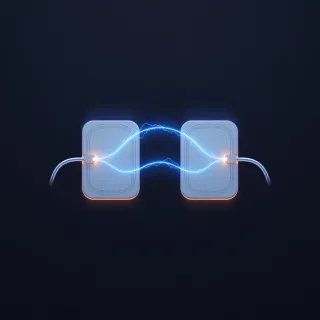
Electrical stimulation — EMS & TENS
Electrical muscle stimulation & transcutaneous electrical nerve stimulationThe plain-English version
Soft adhesive pads on the skin deliver gentle, rhythmic electrical pulses. TENS targets sensory nerves and is aimed at pain — the pulses are thought to interfere with pain signals reaching the brain and to prompt release of the body's own pain-dampening chemicals.
EMS targets motor nerves, producing gentle muscle contractions. That's used to support circulation and help maintain muscle activation in a limb that isn't moving normally.
Most people describe it as a light tingling or tapping.
What the evidence actually says
A 2024 review of neuromodulation for neuropathic pain found that current literature supports TENS for peripheral neuropathic pain, and notes non-invasive techniques like it appear in international guidelines.
A meta-analysis of randomized trials in diabetic neuropathy found significantly greater pain reduction versus placebo at 4 and 6 weeks — but not at 12 weeks — across only 3 trials and 78 patients total. That's a genuinely small evidence base.
da Cunha et al., Int Rev Neurobiol 2024 · DOI · Jin et al., Diabetes Res Clin Pract 2010 · DOI
An important distinction we won't blur
You may see claims online that electrical stimulation "regenerates nerves." There is real research behind that idea — but it comes overwhelmingly from animal studies and from brief stimulation applied directly to a nerve during surgery, not from adhesive pads used in a clinic or at home. Those are different treatments. We offer EMS and TENS for symptom relief and functional support, and we don't claim the pads regrow nerve tissue.
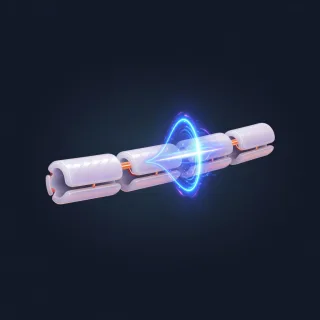
Vibration plate & 635nm LED boot therapy
Supporting therapies within a neuropathy programThe plain-English version
Vibration therapy stimulates the sensory receptors in your feet and legs and encourages circulation. LED boot therapy delivers 635nm red light directly to the feet and lower legs — the same underlying principle as laser therapy, in a form factor that treats a whole foot comfortably at once.
What the evidence actually says
These are used as components of a broader program rather than standalone treatments. LED boot therapy shares the photobiomodulation mechanism described above, though most published trials study laser devices specifically rather than LED boots.
We're straightforward that the supporting evidence here is thinner than for Class IV laser.
Four things worth knowing before you start anything
Nerves heal slowly — when they heal
Peripheral nerves can repair themselves, but they do it on the order of roughly a millimeter a day under good conditions. Any therapy promising to fix long-standing nerve damage in a week is promising something biology doesn't do.
The underlying cause still matters most
If diabetes is driving your neuropathy, blood sugar control does more for your nerves than any device in our clinic. Therapy works alongside that — not instead of it.
"Symptom relief" and "nerve repair" aren't the same claim
A therapy can genuinely reduce your pain without regenerating nerve tissue. Both are worth having. They're just different claims, and honest clinics distinguish them.
Results vary, and some people don't respond
That's true of every therapy on this page. If an evaluation suggests you're unlikely to benefit, we'll tell you that directly rather than sell you a package.
Still have questions about your symptoms?
That's what a no-obligation evaluation is for. Bring your questions — including the skeptical ones.